

Choosing the right container tracking system comes down to one question: which platform actually resolves the visibility problems that slow your operations and increase cost? Accenture research in 2025 found that companies with advanced supply chain capabilities, including real-time tracking and integrated data flows, achieved 23% higher profitability than those with traditional processes.
The same research noted that most organizations are still early in their digital supply chain journey, with supply chains being only 21% autonomous in 2025. This indicates that many teams continue to rely on manual tracking, scattered carrier portals, and delayed information, which limits operational control and exposes them to risk
For logistics teams evaluating solutions, the priority is clear. They need real-time accuracy, predictive ETAs, fewer manual status checks, and a better customer experience, without replacing their existing systems.
SeaRates ERP delivers exactly this by bringing tracking, alerts, and shipment intelligence into one operational source of truth. This article focuses on how SeaRates can help your freight forwarding operations with a reliable, scalable container-tracking system.
Why Container Tracking and Visibility Are Critical in 2026?
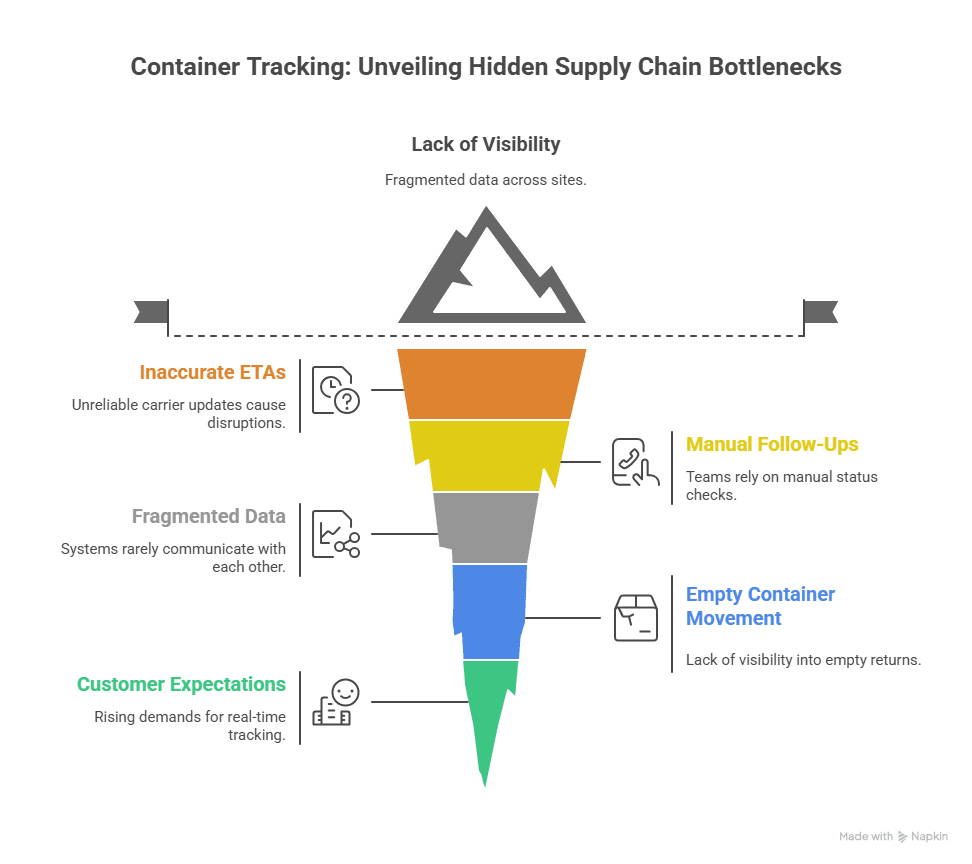
Global shipments often move through a complex chain of operations. This means you have data sourced from multiple sites. But this data is usually fragmented. With a centralized container-tracking software, you can enhance visibility across the multimodal network of rail, air, and sea where shipments move.
However, this is just one bottleneck that global container operators, shipping companies, and supply chain firms face. Some of the major bottlenecks and reasons why container tracking systems become crucial. Such systems improve supply chain visibility, ensuring operational efficiency at all levels and tiers.
This becomes essential if you are in the supply chain and logistics business. Because 90% of organizations don’t have visibility across sub-tier levels, this is a supply chain disruption. This means you need container tracking software.
Other reasons are,
Inaccurate ETAs & Limited Predictability
Unreliable carrier updates create major planning disruptions. ETAs often change without warning, leaving operations teams blind to delays, port congestion, customs hold-ups, or vessel schedule changes. When logistics teams can’t forecast exceptions in advance, the downstream effects become costly missed delivery windows, additional storage fees, and inefficient resource allocation.
High Dependency on Manual Follow-Ups
Without automated tracking, teams rely heavily on emails, phone calls, and status checks across multiple carrier portals. This slows down decision-making and increases the risk of human errors. For companies managing hundreds or thousands of containers each month, the manual workload becomes unmanageable, directly impacting operational performance.
Fragmented Data Across Multiple Systems
Carrier systems, freight forwarder portals, ERP modules, and spreadsheets rarely communicate with one another. This fragmentation results in inconsistent data across departments, finance, logistics, procurement, and customer service. The lack of real-time synchronization not only delays internal workflows but also affects the accuracy of inventory planning and order management.
Limited Visibility Into Empty Container Movement
Empty container repositioning is a hidden cost driver. When companies lack visibility into empty returns, dwell times, or yard locations, they incur detention & demurrage charges. A modern container tracking platform ensures visibility of both full and empty moves, helping operators optimize turnaround time and reduce unexpected penalties.
Rising Expectations for Customer Transparency
Shippers, consignees, and end customers all expect real-time tracking similar to e-commerce delivery experiences. When logistics providers fail to offer detailed shipment visibility, it impacts customer satisfaction scores and weakens trust. Real-time tracking becomes a competitive differentiator in markets where reliability is everything.
What Is SeaRates ERP?
SeaRates ERP is a cloud-based, integrated enterprise resource planning software designed to optimize freight forwarding and logistics operations. It helps you streamline a wide range of business processes, right from sales and quoting to operations, tracking, and invoicing. SeaRates ERP unifies and automates the end-to-end shipping cycle for freight forwarders, NVOCCs, carriers, and global shippers.
Instead of using multiple disconnected tools, spreadsheets, and carrier portals, SeaRates ERP provides a single digital control tower to manage quoting, booking, tracking, documentation, invoicing, customer communication, and analytics.
How SeaRates ERP Enhances Freight Tracking?
SeaRates ERP is not just a container tracking system; it also functions as a unified logistics management ecosystem built for efficient operations. Especially if you are a freight forwarder, NVOCC, 3PL service provider, or a global shipping enterprise, SeaRates ERP is an ideal option that offers accurate shipment visibility.
It reduces the need for your team to juggle data across scattered portals, spreadsheets, and siloed modules.
Some of the core components of SeaRates ERP are,
- Container Tracking Module: This module continuously syncs status updates across activities such as gate-in/out, transshipments, delays, vessel schedules, and ETA changes.
- Operational automation: milestone-driven alerts, document generation, and billing triggers.
- Integration-first design: APIs and EDI connectors so SeaRates can sit beside existing TMS/WMS/ERP investments rather than replace them overnight.
Core Features of SeaRates ERP’s Container Tracking System
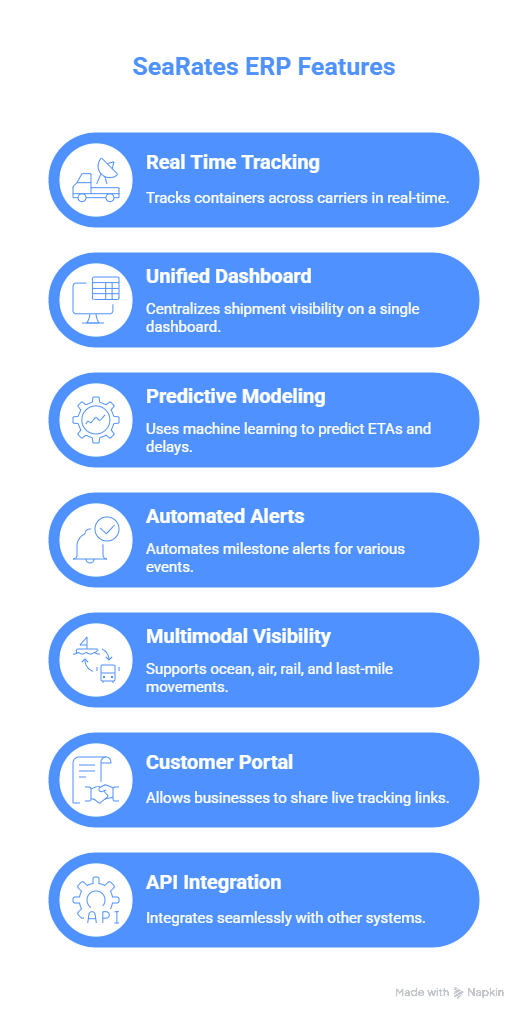
Modern logistics teams need more than scattered updates and carrier portals. They need a container tracking system that consolidates data, automates milestone tracking, and provides predictive intelligence to reduce operational uncertainty. SeaRates ERP delivers this with an end-to-end logistics visibility platform designed for global shipping and supply chain coordination.
Real Time Container Tracking Across Carriers
SeaRates acts as a single source of truth for real-time tracking. It aggregates verified carrier, terminal, port, and AIS vessel feeds so operators can track containers by number, BL, or booking reference without switching tools. This eliminates manual follow-ups and gives teams a unified view of freight tracking across every lane.
Unified Visibility Dashboard
SeaRates centralizes shipment visibility on a unified dashboard. Maritime and inland updates, real-time location intelligence, route-level mapping, and color-coded risk indicators resolve the fragmentation found in traditional container tracking software. Teams gain immediate clarity across every shipment, lane, and customer.
Predictive ETA and Delay Risk Modeling
Machine learning models continuously evaluate vessel behavior, congestion trends, weather shifts, and historical delay data. These predictive ETAs help warehouse and drayage teams plan with confidence, improving utilization and reducing downtime. This level of predictive visibility is critical for modern container tracking systems.
Automated Alerts and Notifications
SeaRates automates milestone alerts for events like port arrival, port departure, customs clearance, schedule deviation, and detention or demurrage risk. Operators receive instant notifications, enabling more proactive decision making, faster issue resolution, and stronger shipping transparency for internal and customer-facing teams.
Multimodal Shipment Visibility
Built as a comprehensive chain-of-logs visibility platform, SeaRates supports ocean, air, rail, and last-mile movements. It connects every leg of the journey into a single timeline from origin pickup to POD and final warehouse delivery, providing end-to-end shipment visibility without gaps.
Customer Visibility Portal
SeaRates boosts shipping transparency by enabling businesses to share live tracking links with shippers and consignees. This reduces status queries, builds trust, delivers a superior customer experience, and keeps support workloads low.
API Integration and ERP Connectivity
With API first connectivity, SeaRates integrates seamlessly with ERP, WMS, TMS, CRM, and port community systems. Documents, milestones, statuses, and alerts sync across platforms, ensuring consistent data across every team involved in global freight tracking.
How SeaRates ERP Solves the Biggest Visibility Problems in Logistics
Global logistics still struggles with fragmented data, unpredictable ETAs, manual status chasing, and rising detention and demurrage exposure. SeaRates ERP addresses these issues by unifying container-tracking system capabilities into a single operational source of truth, reducing friction across planning, operations, and customer service.
Centralized Interface
Many teams operate across multiple carrier portals and siloed systems, which creates inconsistent updates and wasted effort. SeaRates centralizes all carrier feeds into a single interface, so operators no longer have to switch between portals or reconcile conflicting statuses.
When INTECH implemented SeaRates, their teams consolidated feeds from multiple carrier sources into a single dashboard, reducing manual follow-up time and improving cross-regional coordination.
ETA Accuracy
SeaRates layers AI-driven ETA modeling over live AIS vessel data, port schedules, and historical delay patterns so teams get predictive ETAs and early risk signals. You can leverage predictive ETAs to pre-schedule drayage and adjust warehouse labor for key lanes, reducing idle truck time and preventing overtime during peak windows.
Automated Alerts
Manual status checks and ad hoc calls are a recurring drain on capacity. SeaRates automates milestone alerts across events such as gate-in, departure, arrival, customs clearance, and transshipment. After automating these notifications, SeaRates significantly reduces daily manual status checks and shifts staff effort from chasing updates to resolving exceptions faster.
Real-Time Updates
Hidden costs from late visibility detention, demurrage, storage, and re-handling fees hit margins directly. SeaRates surfaces real-time risk alerts for port congestion, extended dwell time, and customs delays so teams can intervene earlier. SeaRates reports instances to prevent avoidable penalties on high-value lanes during busy seasons.
How to Choose the Right Container Tracking System?
Organizations evaluating container tracking software should assess seven essential criteria:
- Breadth of multi-carrier coverage
- Real-time tracking accuracy
- Strength of API and integration capabilities
- Predictive modeling for ETAs and disruption risk
- Scalability, cost, and deployment flexibility
- Ease of use across operational teams
- Robust alerts and exception management
SeaRates ERP meets all these requirements, offering a complete logistics visibility platform designed for modern supply chains.
How Can INTECH’s SeaRates Integration Help You Optimize Operations?
Shipment visibility is now a mission-critical capability in global logistics. As supply chains become more unpredictable, organizations need real-time tracking, predictive intelligence, and a unified container-tracking system that eliminates data gaps and operational friction.
SeaRates ERP delivers this foundation through an integrated visibility and logistics execution platform that empowers teams to plan smarter, act faster, and provide exceptional customer experiences.
Businesses seeking stronger visibility, better cost control, and complete shipping transparency can explore SeaRates ERP or request a personalized demo to see the platform in action.
FAQs
What is a container tracking system?
A platform that provides real-time tracking of containers across carriers and modes, improving visibility and reducing operational uncertainty.
How does SeaRates improve shipment visibility?
By centralizing tracking data from carriers, AIS, ports, and inland networks into one unified dashboard.
Can customers access real-time tracking?
Yes, SeaRates offers live visibility links through a customer portal, enhancing shipping transparency.
Does the platform support multimodal freight tracking?
It covers ocean, air, rail, inland, and last mile, unifying every phase of the shipment.
Does SeaRates integrate with ERP, TMS, and WMS systems?
Yes, the platform offers API first connectivity to sync documents, milestones, and status updates across internal systems.
