

Global supply chains are experiencing pressure from increased tariffs and unprecedented geopolitical turmoil. This has led to many organizations suffering the brunt of idle inventories, and major ports seeing reduced container movements.
Despite such a tough patch in the history of logistics and supply chain operations, global container throughput is projected to surpass 950 million TEUs by 2027.
Therefore, if you are an enterprise involved in port operations or a port operations manager, the challenge of managing containers is a real one. And this is only becoming more complex with the increased flow of business once the global trade scenario improves.
However, there is one solution that you can leverage to ensure optimal port operations- a smart port yard management system.
- But what are these port management systems?
- What are the features it offers?
- And why should you invest?
This guide offers all the answers you need. It covers what port congestion is, the reasons that cause it, and how smart systems can help reduce it. First, let’s understand the congestion problems in ports.
What are Port Congestions?
Port congestion is a logistical bottleneck that occurs when more ships are docked than the port’s expected capacity allows. This means that your port has reached its maximum capacity to handle 20 ships, and there are 45 boats docked, ready to be unloaded. And your yard can’t handle the cargo from such a massive volume of ships.
This is further exacerbated by a lack of equipment, labor shortages, inadequate infrastructure, and other external factors, including weather conditions. Congestion at the port leads to delayed deliveries, increased operational costs, and stockout issues for retailers. It puts pressure on the entire port operations team, leading to errors and mismanagement.
What are the Major Reasons for Port Congestion?
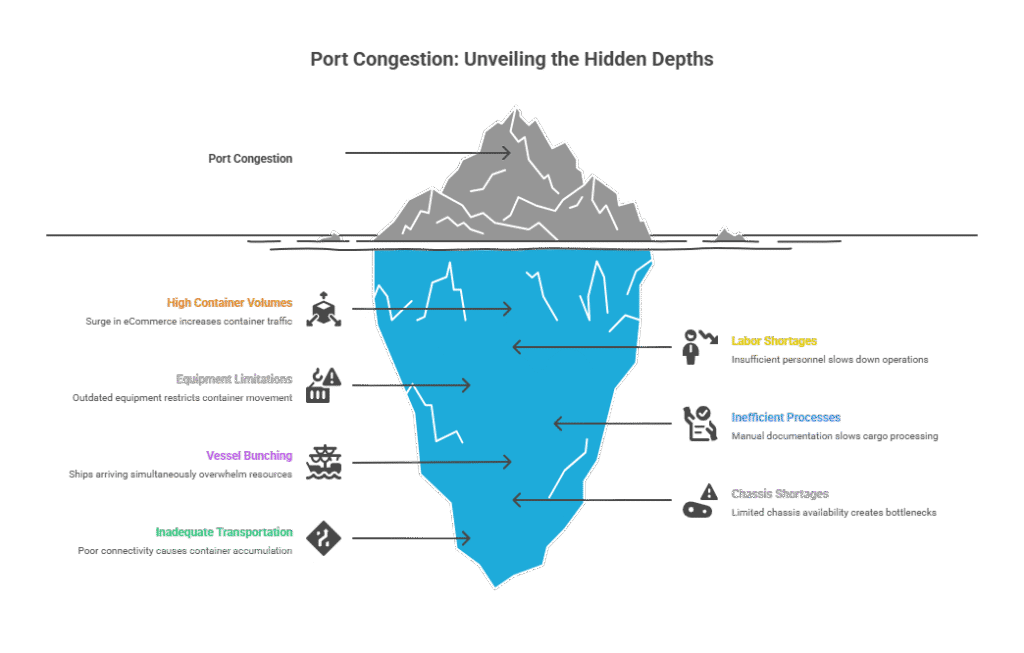
Port congestion occurs due to high volumes of containers driven by increased eCommerce and trade worldwide. Often, limited port capacity becomes a bottleneck that overwhelms the infrastructure. Some of the significant factors that cause port congestion are,
1. High Container Volumes
A sudden surge in consumer spending on eCommerce platforms during the holiday season often leads to a high influx of containers. This spike creates pressure on ports that are already operating near maximum capacity, resulting in delays in unloading and processing cargo.
2. Labor Shortages
A shortage of personnel at ports has a significant impact on operational efficiency. When there aren’t enough dockworkers, crane operators, or administrative staff, container processing slows down considerably. Labor disputes, strikes, or difficulty in recruiting skilled workers can exacerbate these shortages, creating backlogs that take weeks to clear.
3. Equipment and Infrastructure Limitations
Outdated or insufficient equipment, such as cranes, reach stackers, and terminal tractors, restricts the speed at which containers can be moved. Aging infrastructure, narrow berths, and limited yard space prevent ports from efficiently handling modern mega-ships that carry thousands of containers.
4. Inefficient Cargo Handling Processes
Manual documentation, a lack of automation, and poor coordination between different stakeholders all contribute to slowing down cargo processing. When customs clearance, inspection procedures, and documentation requirements are not streamlined, containers remain stuck at ports longer than necessary.
5. Vessel Bunching and Scheduling Issues
Multiple ships arriving simultaneously overwhelm port resources. Disruptions in global shipping schedules, caused by weather events, mechanical failures, or route deviations, result in vessels arriving in clusters rather than at planned intervals, creating temporary capacity crunches.
6. Chassis and Container Shortages
Limited availability of chassis for transporting containers inland creates bottlenecks at port exits. Similarly, shortages of empty containers in specific locations prevent efficient repositioning, forcing ships to wait longer at ports.
7. Inadequate Inland Transportation
Poor connectivity between ports and inland distribution centers, whether via rail or road networks, causes containers to accumulate at port terminals. When trucking capacity is limited or rail infrastructure is inadequate, cargo cannot move out quickly enough to free up space for incoming shipments.
How do Yard Management Systems Help Reduce Port Congestion?
Yard management systems can leverage artificial intelligence to employ predictive models, thereby reducing port congestion. Especially when 63% of the organizations looking for a yard system solution want real-time visibility, understanding how it works becomes crucial. Here is how yard management systems work and help reduce port congestion.
How Yard Management Systems Work?
Yard management systems operate as centralized command centers that integrate multiple technologies to create real-time visibility across port operations. These systems collect data from various sources, including shipping schedules, weather patterns, and Automatic Identification System (AIS) data to provide a comprehensive view of port activities.
Core Technologies Powering Yard Management Systems
AI and Predictive Analytics form the backbone of modern yard management. It analyzes historical cargo data and current conditions to forecast arrival times, dwell times, and potential congestion points.
Here are some of the other technologies that power yard management systems,
- Machine learning algorithms continuously improve accuracy by training on operational patterns, enabling ports to anticipate bottlenecks before they occur.
- IoT-Enabled devices provide real-time location data through RFID tags, GPS devices, and Bluetooth Low Energy (BLE) beacons attached to containers.
These sensors transmit continuous updates on asset location, status, and environmental conditions, such as temperature, creating a live digital map of the entire yard.
Plus, digital twin technologies create virtual replicas of port facilities. It allows operators to simulate container flows, test different stacking strategies, and optimize resource allocation. This simulation capability enables predictive scenario planning for peak traffic periods.
Key Functions That Reduce Congestion
Automated gate management and yard management systems streamline entry and exit processes through AI-based license plate recognition and automated check-in systems, enhancing security and efficiency. It eliminates manual bottlenecks that traditionally caused delays at facility entrances. This reduces driver wait times and improves overall throughput.
Here are some key functions to reduce port congestion.
- Intelligent Dock Scheduling coordinates vessel arrivals with berth availability, ensuring ships arrive only when dock space is ready. The system assigns trailers to appropriate dock doors based on real-time conditions, maximizing dock utilization and reducing idle time.
- Optimized Yard Space Management uses AI-powered algorithms to determine the most efficient container stacking configurations and storage locations. The system tracks the position of every trailer and container, preventing unnecessary re-handling and minimizing delays.
- Dynamic Resource Allocation automatically assigns spotters and yard equipment to move trailers based on dock availability and priority levels. Intelligent trailer prioritization ensures high-urgency loads receive immediate attention while optimizing overall yard movements.
- Predictive Congestion Management analyzes real-time traffic patterns and historical data to forecast peak congestion hours, allowing terminal operations to adjust schedules proactively.
By predicting when and where congestion will occur, ports can redistribute resources and adjust docking schedules before bottlenecks form, thereby optimizing operations. Therefore, it is undeniable that AI-based smart yard management systems can help your organization reduce congestion. However, it’s the execution that matters.
Every port operation is unique and has its own specific requirements. For example, a port in a European country will have different weather conditions, operational standards, and requirements compared to a port in an Asian country. This is why you need a customized solution that’s executed to specific port requirements.
Step-by-Step Process to Implement Smart Yard Management System
Implementing a smart yard management system requires a step-by-step process. This includes steps like assessing the existing operations, defining the objectives you want to achieve, selecting the right solution, creating an execution plan, and executing it.
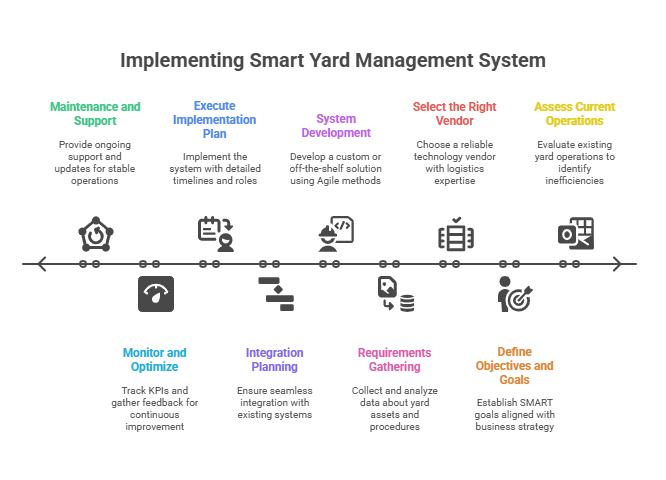
1. Assess Current Operations
The first step involves conducting a comprehensive evaluation of existing yard operations to identify bottlenecks, inefficiencies, and areas requiring improvement. Map out current workflows and processes to pinpoint specific pain points. Engage stakeholders, including yard workers, supervisors, and logistics personnel, to gather insights about operational challenges.
This assessment establishes a baseline understanding of yard performance metrics, including truck turnaround times, dwell times, detention fees, and patterns of resource utilization.
2. Define Objectives and Goals
Establish SMART (Specific, Measurable, Achievable, Relevant, and Time-bound) goals that align with the overall business strategy. Determine key performance indicators (KPIs) such as reduced dwell time, improved asset utilization, optimized labor costs, and increased on-time delivery rates.
Clear objectives guide the implementation process and provide benchmarks for measuring success, whether the focus is on reducing truck turnaround time, improving real-time visibility, or enhancing shipment scheduling.
3. Select the Right Vendor
Partner with a reliable technology vendor experienced in logistics and supply chain software development. Research potential partners thoroughly, examining their track record, industry expertise, client reviews, and portfolio of completed projects.
Compare multiple vendors based on features, pricing models, integration capabilities, scalability options, and ongoing support services. Request product demos to test-drive the software and ensure it fits operational requirements before committing.
4. Requirements Gathering
Conduct an in-depth discovery phase involving the collection and analysis of information about yard assets, locations, and operational procedures. The development team should scope the project based on the collected data, presenting their vision for the system’s features and functionality.
During this stage, create a detailed project roadmap outlining implementation milestones, resource requirements, and timeline expectations. Set benchmarks to assess YMS efficiency and determine how to achieve defined objectives.
5. System Development
Choose between custom-built or off-the-shelf solutions, with custom platforms offering better alignment with specific operational challenges and scalability needs. Development typically follows Agile methodologies like Scrum, creating software iteratively through 2-week sprints.
Each sprint delivers stable, working functionality that undergoes rigorous quality assurance testing for both backend and frontend components. The development process should prioritize core features, including gate management, dock scheduling, asset tracking with RFID/GPS, and reporting analytics.
6. Integration Planning
Ensure seamless integration with existing systems, including Warehouse Management Systems (WMS), Transportation Management Systems (TMS), and Labor Management Systems (LMS). Evaluate integration capabilities, including API support and data exchange protocols.
Collaborate closely with IT departments to plan for technical requirements and address potential challenges. Additional integrations may include barcode/RFID systems, IoT sensors, Electronic Data Interchange (EDI), and GPS tracking systems.
7. Execute Implementation Plan
Develop a comprehensive implementation plan that includes detailed timelines, clearly assigned roles and responsibilities, and established communication channels. Consider a phased rollout approach to minimize operational disruptions and allow for controlled testing in specific yard areas before full deployment.
Establish project milestones and deadlines while ensuring all team members understand their specific tasks and deliverables.
8. Monitor and Optimize
Implementation continues beyond system launch through continuous performance monitoring and optimization. Regularly track KPIs, including dwell time, carrier on-time performance, wait times, and unload efficiency to identify areas needing intervention. Gather user feedback from staff to identify areas for improvement and make necessary system adjustments.
Modern YMS platforms provide reports and analytics crucial for measuring success against defined objectives and driving continuous improvement initiatives.
9. Maintenance and Support
Establish a long-term advancement strategy ensuring stable, smooth, and secure operations. Schedule regular maintenance activities, including software updates, security patches, configuration adjustments, and functionality enhancements.
Conduct periodic testing of newer versions and performance optimizations to adapt to evolving business needs. Ongoing support from the technology partner ensures the system remains effective as operational requirements change and scale.
How INTECH Helps You Build a Custom Yard Management System?
Increasing port congestion is a bottleneck in operations that need more than just an adjusted workflow. You need a smart solution that can not only provide real–time insights but also improve the operational efficiency. Utilizing a smart yard management system equipped with sensors and AI-based technologies can help you optimize your operations.
However, selecting the right solution’s provider, creating an implementation plan, and executing it correctly become vital. This is where INTECH can help with more than a decade of experience in offering smart solutions for port and terminal operations. So if you are looking to reduce port congestion through a smart YMS solution, contact us now.
FAQs
How do smart yard systems reduce congestion costs?
By ensuring fast and reliable access to the proper containers through predictive stacking and live tracking, container dwell times are shortened, directly lowering penalty risks.
What’s the main advantage of real-time, data-driven slotting?
It replaces guesswork with predictive optimization, so stacks are built for future moves – improving efficiency on both the yard and vessel side.
Can these systems work with older TOS or ERP platforms?
Modern solutions typically include open APIs and middleware, providing compatibility for terminals transitioning from legacy setups.
What about safety and regulatory compliance?
Systems enforce stack limits, schedule inspections, and flag high-risk movements automatically, helping terminals meet OSHA, ISPS, and other regulatory mandates with ease.
Are the systems future-ready for automation trends?
Yes, they are designed for progressive automation – integrating with AGVs, drones, and IoT security networks as these technologies are adopted.
